Hidden Valley Equestrian Estates: A Buyer’s Due Diligence Guide
February 19, 2026
February 19, 2026
You love the idea of riding out from your own barn, but buying the wrong equestrian estate can saddle you with costly surprises. Hidden Valley offers rare acreage and access to open space, yet these properties come with unique rules and technical checks. In this guide, you will learn the essential steps to verify zoning, permits, water and septic, fire risk, trail access, and arena placement before you write an offer. Let’s dive in.
Zoning is the foundation of every equestrian purchase in Hidden Valley. The community sits in unincorporated Ventura County and is guided by the Lake Sherwood and Hidden Valley Area Plan, which shapes land use and minimum lot sizes. Review the applicable designations and policies in the County’s Area Plans to understand how they affect equine uses and future changes to the property. You will use this framework to confirm what is allowed on a specific parcel.
Before you evaluate barns or arenas, confirm the Assessor’s Parcel Number and its precise zoning with Ventura County Planning. The One-Stop Permits Planning counter can verify the zoning map sheet and answer permit history questions. This is where you will also ask whether prior approvals, such as Conditional Use Permits, exist for the property.
Ventura County regulates animal keeping through its Non-Coastal Zoning Ordinance. The ordinance uses an animal unit system to convert species and sizes into allowable animals per lot. For equines, adult animal unit factors are tiered by size, then scaled by lot area to determine how many horses are allowed as a by-right use versus when a discretionary permit is needed.
Basic private animal keeping may qualify for ministerial approval in some zones. Commercial boarding, lessons, or events often require a Conditional Use Permit with conditions on noise, traffic, manure, drainage, and hours. Ask the seller for any Zoning Clearances, CUPs, and attached conditions, and verify with the County if you plan to expand operations.
Hidden Valley ranches often include private roads, recorded easements, and sometimes conservation restrictions. These can shape how you access the property, where you can build, and how you connect to trails. Order a preliminary title report early and request full copies of all recorded documents.
Ask the title officer to list and provide all easements and recorded restrictions. Common items include utility easements, private road easements with shared maintenance, and trail or conservation easements. Map each easement against the seller’s site plan to see how they affect arena siting, paddocks, driveway placement, and future improvements.
Many parcels are served by private roads. Look for recorded road maintenance agreements that define cost sharing and upkeep responsibilities. Confirm gate protocols and whether emergency services require specific hardware for access.
Many Hidden Valley estates rely on private wells and septic systems. These systems are critical for daily life and equine operations, so you should verify both performance and compliance before you remove contingencies.
Request the well completion report if the seller has one, along with a recent pump test showing yield, sustained pumping rate, and drawdown. Ask for current water-quality lab results for coliform, nitrate, and salinity. If these records do not exist, make a professional pump test and lab analysis a purchase contingency.
Obtain septic system permits, as-built drawings, inspection and maintenance records, and any County certifications. Confirm there is adequate space for a replacement drainfield, which matters if you plan to add stalls, an ADU, or a larger barn. If capacity is unclear, require a soils and percolation test and an OWTS feasibility review.
Wildfire exposure is a real factor for rural properties. If the parcel sits in a High or Very High Fire Hazard Severity Zone, California’s AB 38 requires a real estate defensible space inspection and related seller disclosures. These rules and the property’s fire-hardening features also influence insurance options and premiums.
Ask for any existing AB 38 defensible space inspection report, plus documentation of fire-hardening work and communication with Ventura County Fire. If a property spans multiple zones, local policy can apply the highest hazard rating to the entire parcel for sale disclosures. Confirm what will be required of you prior to close and during ownership.
Evaluate clearance around structures, ignition-resistant building materials, and water sources for firefighting. Check driveway width, grade, turnouts, and turnaround areas for large apparatus, and confirm gate access meets local fire standards. These items can affect both approvals and insurability.
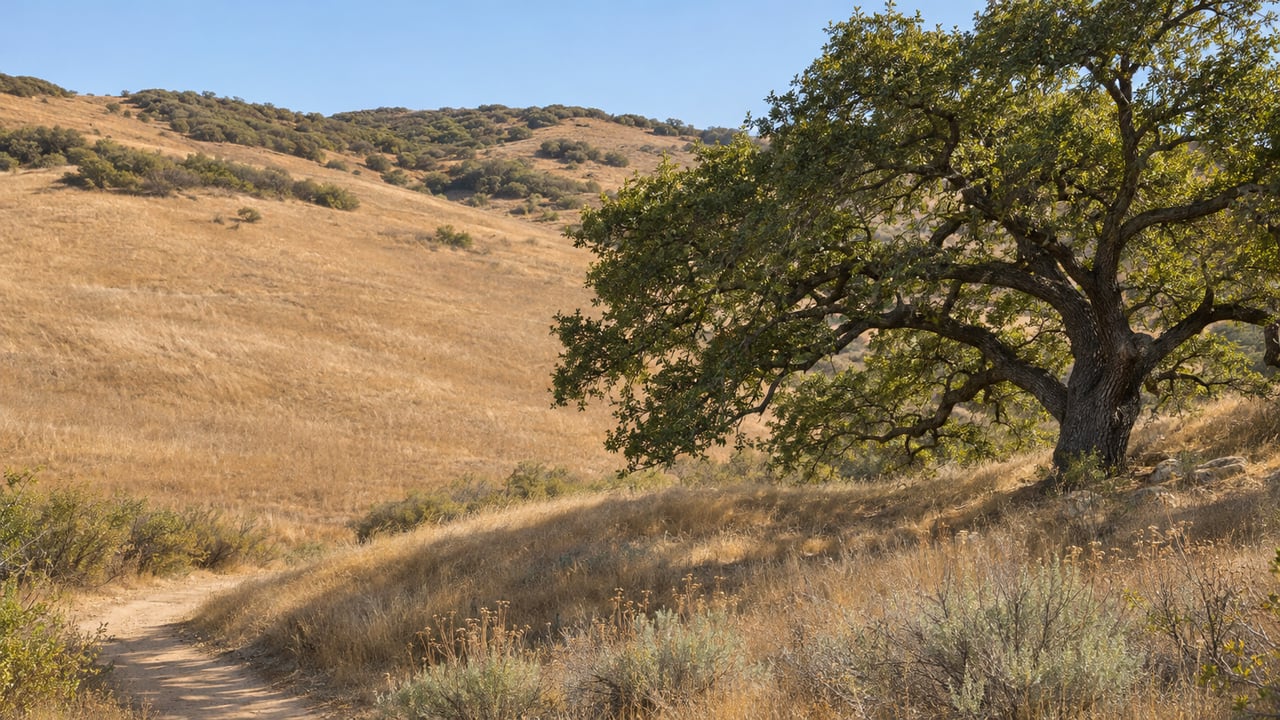
Hidden Valley sits near a network of multi-use regional trails and open space. That proximity is a major draw, but your legal right to use a specific connection depends on recorded easements and agreements, not just informal use.
Ask the seller for copies of any recorded trail easements or written access agreements that allow you to reach public trailheads. If a listing claims direct trail access, verify that the easement is recorded, clearly mapped, and transferable. Do not rely on historic use alone when planning your riding routes.
Trail connections can be the subject of negotiation in the Lake Sherwood and Hidden Valley area. Look for notes on proposed dedications in subdivision or environmental files, and ask local agencies about any active discussions. Recorded documents should confirm what you can count on today.
Well-planned arenas and heavy-use areas ride better and reduce neighbor impacts. In Hidden Valley, grading for arenas and major site work often requires County review. Budget time for design and permits before you assume a new ring or large cut and fill is feasible.
Significant cut or fill, regrading, and retaining walls typically trigger a grading permit through Ventura County Public Works. Plan review will address erosion control, slope stability, and stormwater runoff. If an existing arena lacks records, require an engineered grading and drainage review.
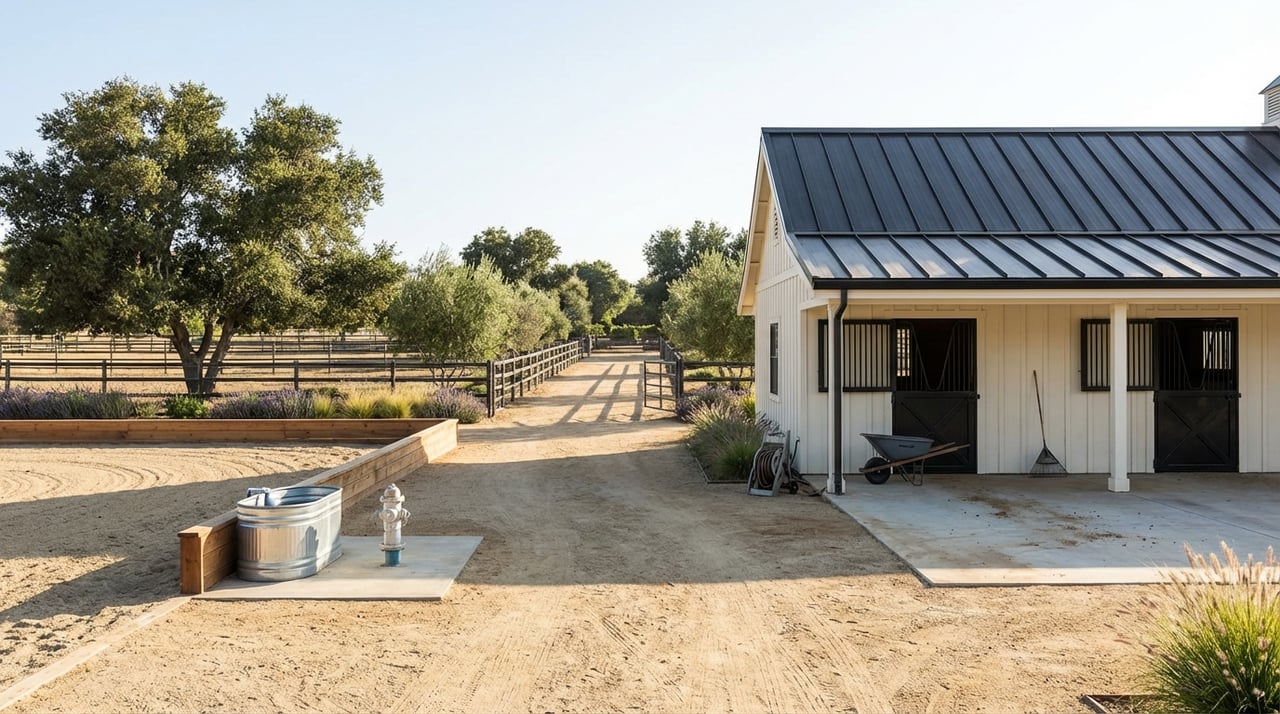
Prefer flatter bench areas for arenas to reduce grading. Keep rings out of riparian corridors and mapped floodplains, and design for positive drainage away from arenas and corrals. Use vegetative buffers and filter strips to protect downslope areas, following practical guidance from equestrian facility design references.
For any active barn or boarding use, ask for a written manure-management plan that covers storage location, removal frequency, off-haul vendors, access for trucks, and runoff controls. Plan footing maintenance and dust suppression to minimize neighborhood impacts. Extension resources recommend avoiding organic waste in footing and using covered storage where runoff is a concern.
Emergency access is not just a safety issue. It can affect permits and insurance. Verify driveway width and grade, turning radii for trailers and fire apparatus, and gate access requirements such as approved lock systems. Clarify responsibility for private road maintenance and any capital projects that may be shared with neighbors.
Use this sequence to organize your offer and contingency timeline.
Compared with many city neighborhoods in the Conejo Valley, Hidden Valley parcels are often larger with AE and RA zoning that can be more permissive for animal keeping. At the same time, County-level environmental and fire regulations apply, shaped by the Area Plan and proximity to protected open space. If you are comparing to suburban tracts with city services, expect different rules on animal counts, plus more reliance on private well and septic systems.
With the right plan, you can buy confidently and enjoy the lifestyle Hidden Valley is known for. Start early with zoning verification, gather permits and records, then bring in the right specialists to test water, assess septic capacity, confirm fire readiness, and validate trail access. If you want a seasoned advisor to quarterback the process and protect your interests, connect with Jaime Krupnick to Request a Private Consultation.
Stay up to date on the latest real estate trends.

From first conversation to closing day and beyond, Jaime delivers a true concierge experience. She guides clients through every step of buying and selling with clarity and confidence, backed by a trusted team of top-tier professionals. Her team can assist every step from staging and design to photography, inspections, contractors and lending, ensuring the process feels seamless, elevated and exceptionally well managed.
Jaime Krupnick | CA DRE# 02139605
[email protected]
(310) 749-0703
100 N Westlake Blvd Ste 100A
Westlake Village, CA 91362
Rodeo Realty, Inc. | CA DRE# 00951359