Malibu Oceanfront Or Canyon Estates? How To Choose
July 9, 2026
July 9, 2026
If you picture Malibu as one simple beach town, choosing between oceanfront and canyon living can feel harder than it should. In reality, Malibu is shaped by coastline, hillsides, canyons, access rules, and environmental conditions that create two very different ownership experiences. If you are deciding between a home on the water and an estate tucked into the hills, this guide will help you compare lifestyle, privacy, design constraints, and long-term practical tradeoffs. Let’s dive in.
Malibu is not a uniform stretch of shoreline. The city describes Malibu as a coastal mountain community where the entire city sits inside the California coastal zone, more than 80% of the land is hillside, and even flatter areas can be affected by flooding and other environmental issues.
That matters because an oceanfront estate and a canyon estate are not just two versions of luxury living. They often come with different daily rhythms, permitting realities, and risk factors. Before you focus on finishes or square footage, it helps to understand how the setting itself shapes the way you live.
If your dream is to step outside and be close to the sand, oceanfront Malibu delivers the most direct version of that lifestyle. Malibu has 21 miles of coastline, several major public beaches, and many public access ways that bring both residents and visitors to the shore.
That creates a classic coastal routine built around beach walks, surf sessions, outdoor entertaining, and immediate water views. It also means oceanfront homes can feel more public-facing, especially on busy weekends when Pacific Coast Highway is regularly over capacity as people head toward the beach.
Oceanfront homes often come with a stronger marine influence. Based on NOAA and National Weather Service guidance about the Southern California marine layer, coastal properties are generally more likely to feel cooler and foggier in summer than homes farther inland.
For some buyers, that is part of the appeal. For others, especially buyers who want brighter afternoons and less marine cloud cover, it is an important day-to-day difference to consider.
Not every oceanfront lot in Malibu looks the same. The shoreline includes sandy beaches, bluff-backed coves, and rocky headlands, so one parcel may offer direct sand frontage while another sits above the water on a bluff.
From a building standpoint, beachfront lots are governed differently than non-beachfront lots. Malibu’s coastal planning rules include specific setback standards, narrower side setbacks, and height limits that generally keep beachfront homes lower profile and more frontage-conscious rather than wide and sprawling.
Oceanfront living tends to fit buyers who want direct beach access and a strong connection to Malibu’s shoreline lifestyle. If your ideal day includes walking to the water, hosting around the coast, and making the beach part of your routine, this setting can feel hard to replace.
The tradeoff is visibility and long-term coastal risk. Malibu’s Coastal Vulnerability Assessment identifies sea-level rise, tidal inundation, storm flooding, and coastal erosion as key coastal issues, so oceanfront ownership often requires a clear-eyed approach to hazard management over time.
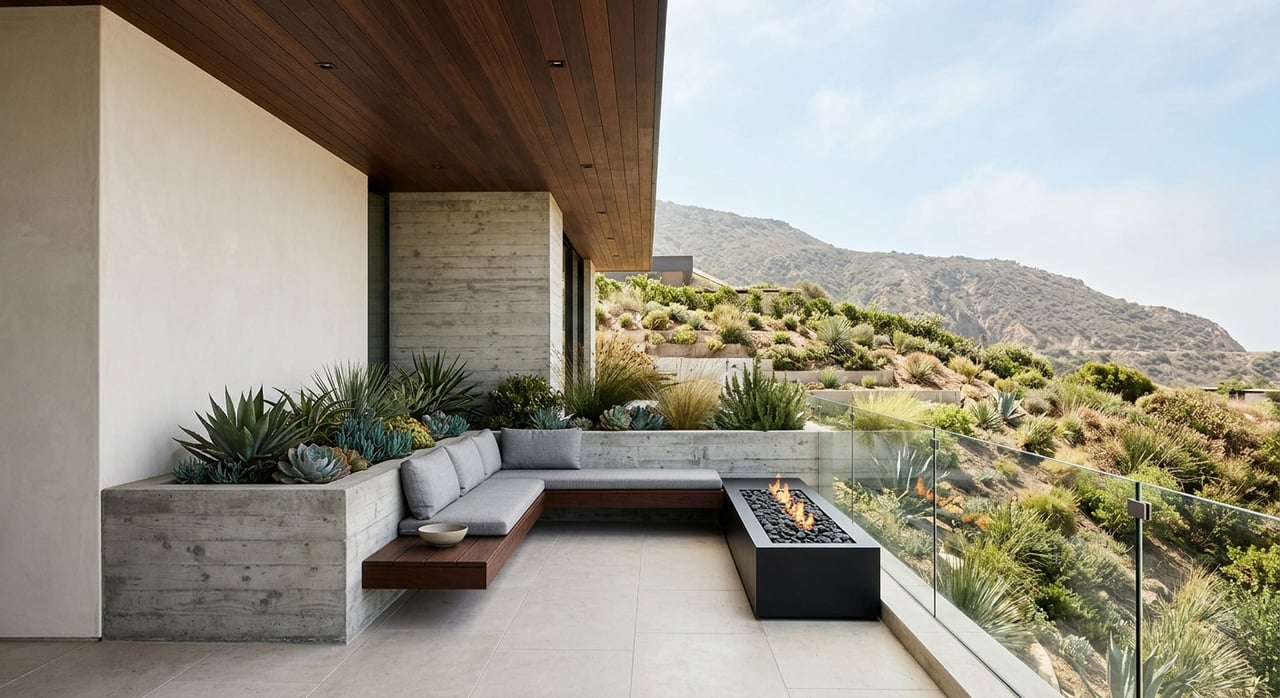
If oceanfront Malibu is outward-facing, canyon Malibu often feels more inward and secluded. The city’s broader vision emphasizes preserving canyons, hills, mountains, open space, and property-owner privacy, which helps explain why many canyon homes read more like retreat properties than beach compounds.
For buyers who value quiet, space, and a sense of separation from the weekend beach scene, this can be the bigger luxury. Canyon estates often offer a more private daily experience shaped by topography, winding roads, and distance from the shoreline traffic flow.
Canyon living can also feel more connected to inland recreation. Malibu’s coastal access network and park system extend beyond the beaches to inland areas and trailheads, including places such as Escondido Canyon Park, Tuna Canyon Park, Cameron Nature Preserve at Puerco Canyon, and Corral Canyon Park.
That makes canyon estates appealing if your idea of Malibu includes views, open space, and proximity to hiking terrain rather than immediate sand access. For many buyers, the shift from beach energy to a quieter natural setting is exactly the point.
One reason canyon homes feel so different is land pattern. Malibu’s planning framework includes residential lots that range from about 10,000 square feet to an acre, along with 2-, 5-, and 10-acre parcels and even larger holdings on some coastal slopes.
Because of that variation, canyon estates can feel much more spread out than beachfront properties. Hillside design standards also encourage homes that step with the terrain, use multiple building pads, and minimize aggressive grading, which is why canyon homes often feature terraced layouts, split levels, garages on separate pads, and view decks that follow the slope.
Canyon properties are often sunnier and less fog-prone than homes right on the coast because hills and mountains limit how far marine-layer clouds move inland. That can be a meaningful quality-of-life advantage if you prefer a brighter and warmer feel.
The tradeoff is a different hazard profile. In canyon areas, buyers may need to weigh wildfire risk, mudslide concerns after burned hillsides, and access issues during critical weather events, including Public Safety Power Shutoffs used in fire conditions.
When you compare the two settings, the right choice usually comes down to how you want to live in Malibu, not which address sounds more prestigious.
| Factor | Oceanfront Estates | Canyon Estates |
|---|---|---|
| Daily lifestyle | Beach-centered and coastal | Retreat-like and nature-linked |
| Privacy | More public-facing | Generally more secluded |
| Microclimate | Cooler, foggier, marine-influenced | Often sunnier and less fog-prone |
| Home form | Lower-profile, frontage-conscious | Terraced, stepped, multi-pad layouts |
| Main access pattern | Near beaches and PCH activity | Winding roads and inland routes |
| Key long-term risks | Sea-level rise, erosion, storm flooding | Wildfire, mudslide, access concerns |
Oceanfront may be the better fit if your top priority is direct shoreline living. You may prefer this setting if you want immediate beach access, love entertaining around the water, and do not mind a home that feels more visible and connected to Malibu’s public beach environment.
This choice tends to make sense when the coast is the lifestyle, not just the view. If you will use the beach often and value that convenience every day, the tradeoffs may feel well worth it.
Canyon living may be the stronger fit if you want privacy, space, and a more retreat-like atmosphere. Buyers often choose this setting when they care more about open land, hillside views, and a quieter rhythm than about walking straight to the sand.
This can be especially appealing if you want a home that feels tucked away and more connected to trails and natural terrain. In that case, distance from the beach is not a drawback. It is part of the value.
Neither setting is simple when it comes to building or remodeling. The constraints are just different.
Beachfront parcels may involve stringline, setback, and shoreline-related rules. Hillside parcels may involve grading, slope design, and landform standards. If you are considering changes to a property after purchase, it is wise to evaluate not only the house itself, but also how the lot affects future flexibility.
A common mistake is assuming oceanfront is automatically the more luxurious option. In Malibu, luxury is not defined by one formula. The city’s planning vision places value on natural resources, privacy, rural character, and views, not just shoreline proximity.
The better question is which environment supports the life you actually want to live. For one buyer, that is sunrise over the water and a beach walk before lunch. For another, it is a private estate with open sky, layered hills, and a calmer sense of arrival.
If you are approaching Malibu as both a lifestyle purchase and a financial one, the most useful comparison is not a simple prediction about appreciation. A more practical lens is how each setting affects owner convenience, renovation friction, and long-term risk management.
Oceanfront homes may offer unmatched beach immediacy, but they also bring coastal exposure and a more public setting. Canyon estates may offer more privacy and space, but they can require more attention to slope conditions, fire-weather planning, and road access. The strongest choice is usually the one that best aligns with how you plan to use the property over time.
If you are weighing Malibu oceanfront versus canyon estates and want a more tailored perspective on fit, privacy, and long-term usability, Jaime Krupnick offers a discreet, high-touch approach to luxury home buying and selling.
Stay up to date on the latest real estate trends.
From first conversation to closing day and beyond, Jaime delivers a true concierge experience. She guides clients through every step of buying and selling with clarity and confidence, backed by a trusted team of top-tier professionals. Her team can assist every step from staging and design to photography, inspections, contractors and lending, ensuring the process feels seamless, elevated and exceptionally well managed.
Jaime Krupnick | CA DRE# 02139605
[email protected]
(310) 749-0703
100 N Westlake Blvd Ste 100A
Westlake Village, CA 91362
Rodeo Realty, Inc. | CA DRE# 00951359