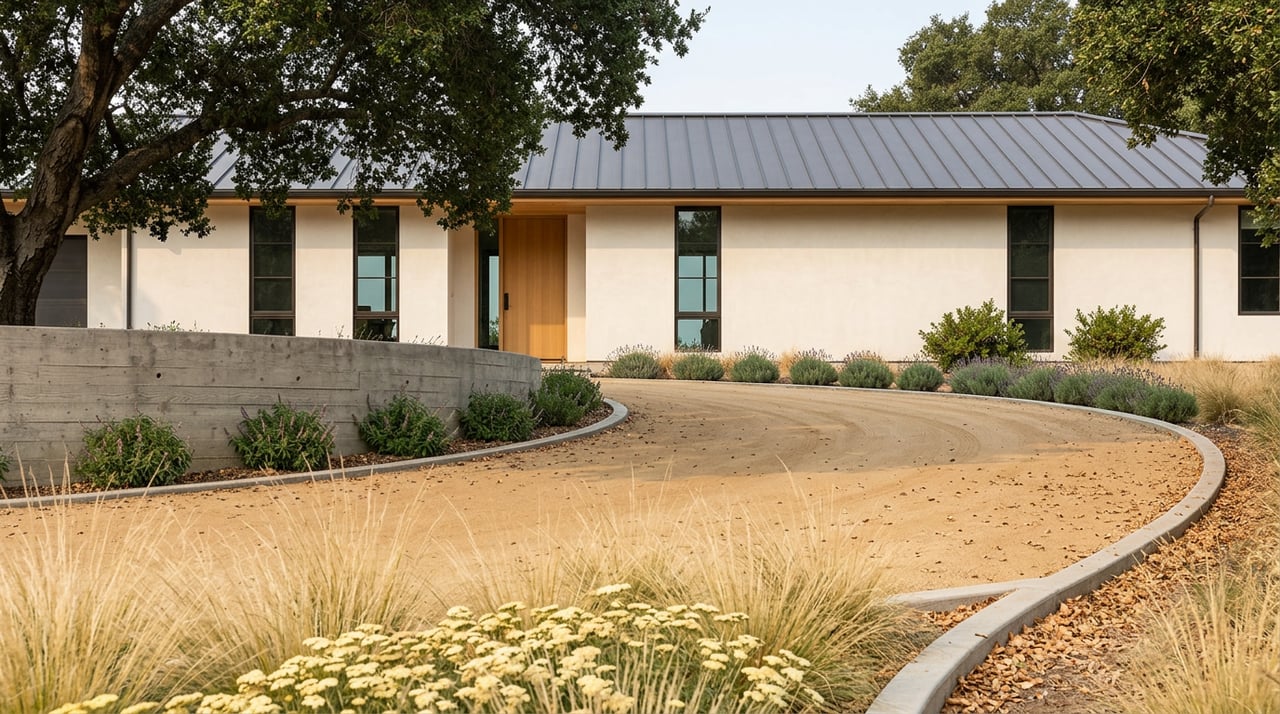
What A Hidden Valley List Price Actually Buys
August 6, 2026
August 6, 2026
The two active listings inside the Hidden Valley enclave as of early July 2026 carried a median asking price of roughly $17.5 million and had been sitting on the market for an average of 130 days. That is not a market signal in the usual sense. With only about 32 homes in the core valley, a single stale listing sets the median, and days on market measure the patience of the seller more than the appetite of the buyer.
For anyone comparing Hidden Valley to Sherwood, North Ranch, or the gated pockets of Westlake Village, the number on the MLS is the least useful figure in the deal. The transaction turns on a well pump test, a county area plan written in 1987, and a fire insurance market that has quietly become the third negotiator at the table. Lead with those, and the price begins to make sense.
Hidden Valley sits inside a water district that, by design, does not deliver drinking water to the tap. Every residence draws from a private well, and every well that serves as a sole domestic source has to satisfy the Ventura County Public Works Agency before a new or expanded use is approved.
The mechanics are specific. Under Ventura County Well Ordinance No. 4468, a Water Well Pump and Recovery Test is required to demonstrate long-term supply. The pump test criteria set occupant demand at 100 gallons per day per capita, then apply a fourfold safety factor to account for long-term aspects of supply. Where multiple wells are used together, each has to produce at least five gallons per minute. Productive Ventura County wells typically fall in a five to fifteen gpm band, which sounds ample until the safety factor and the irrigation allowance are applied to a twenty-acre parcel with a guest house, a barn apartment, and a pool.
A buyer who assumes the seller's existing certification transfers cleanly to a planned addition, second dwelling, or expanded stable is usually wrong. Any new or expanded use restarts the review.
The friction this creates in a transaction is timing. A pump test has to be supervised by a licensed contractor or a registered civil engineer, the well must sit idle for at least seventy-two hours before testing begins, and drawdown has to stabilize for a minimum hour at the end. Results then go to the Groundwater Section and, separately, to Ventura County Environmental Health for water quality certification. Buyers who write a thirty-day close on a Hidden Valley estate without a water contingency have not read the property.
The Lake Sherwood/Hidden Valley Area Plan was first adopted in 1987, updated in 2020, and covers roughly 8,252 acres in the Lake Sherwood drainage basin. Rural Residential designations set minimum parcel sizes between two and ten acres, while Open Space designations run from ten to eighty acres and higher. The plan's stated purpose is to preserve existing land-use patterns and predominant lot sizes.
Read that as an economist would. The area plan is a supply cap. There is no path to subdivide a twenty-acre ranch into six three-acre parcels, no path to introduce multi-family product, and no mechanism by which the roughly thirty-two homes in the core enclave become sixty. The Hidden Valley Municipal Water District, formed in 1960 specifically to keep the area from being annexed into a larger purveyor, reinforces the same outcome from the water side.
The consequence for pricing is that Hidden Valley trades more like a limited-edition asset than a neighborhood. A seller who does not need to sell simply waits. That is why a 130-day average days-on-market figure in a valley of thirty-two homes should not be read as weakness.
Buyers weighing Hidden Valley against Hidden Hills, the guard-gated city inside Los Angeles County, are often surprised to learn they are looking at different asset classes with a similar headline number.
| Hidden Valley (Ventura County) | Hidden Hills (LA County) | |
|---|---|---|
| Governance | Unincorporated, area-plan zoned | Incorporated city, three guard gates |
| Minimum parcel | 2 to 10 acres, most homes on 20+ | 1 acre citywide, no subdivision below |
| Water | Private wells, county-certified | Municipal |
| Approximate scale | ~32 homes in core enclave | ~660 homes |
| Recent pricing | ~$17.5M median list, July 2026 | ~$8.2M median sale, May 2026 |
Hidden Hills concentrates equestrian zoning inside a compact, gated municipal footprint. Hidden Valley trades gates and municipal services for land and horizon. A buyer who wants a barn, a guest house, and a private ridgeline is buying a fundamentally different product in the Ventura County valley, and the price per acre once you factor land ratios often narrows the gap that the headline medians suggest.
Because the sample is thin, the recent listing set is more instructive than any median. Three properties on or adjacent to the valley illustrate the range:
The through-line is that a Hidden Valley purchase is rarely a single-structure transaction. It is a compound of a main residence, one or more guest houses, an equestrian facility rated for either private use or a boarding and training operation, and, in most cases, a well infrastructure that has to be inherited, understood, and maintained. Underwriting a lender's appraisal against this kind of asset requires comparables that often live within the same handful of parcels, which is another reason days on market carry so little signal.
Hidden Valley falls inside California's High Fire Hazard Severity Zone framework, and the underwriting climate for equestrian estates has tightened materially. Buyers who assume standard homeowner coverage will translate to a twenty-acre ranch with a stable, a hay barn, and a manager's residence are frequently corrected in escrow.
A prudent Hidden Valley purchase now includes an insurance feasibility step before removing contingencies. That means an early conversation with a broker who writes California brush-zone risk, a request for the seller's current declarations page, and a defensible-space walk with the property manager if the seller employs one. On a property with multiple insurable structures, the annual premium is a real line item, and it belongs in the analysis before the appraisal comes back.
The Santa Monica Mountains National Recreation Area, which forms Hidden Valley's southern border, contains more than 500 miles of public trails used by hikers, mountain bikers, runners, and equestrians. Santa Rosa Valley Park adds a 50-acre park with two equestrian riding areas managed by Ventura County Parks. Sherwood Country Club, founded in 1989 and operating as a private member-owned club just east of the valley, gives Hidden Valley owners a nearby anchor for golf, tennis, and dining without the club footprint sitting inside the residential enclave itself.
For a buyer whose horses live at home, that trail and open-space adjacency is the entire premise. It is also the reason Hidden Valley resists comparison to any subdivision that markets a "riding trail" as an amenity. The recreation area is the amenity. The house is the base camp.
Do all Hidden Valley parcels require a well pump test at sale? Not automatically. The Ventura County pump-and-recovery test is triggered by new or expanded use, which includes many additions, second dwellings, and expanded equestrian structures. Existing certifications transfer, but any planned change generally resets the analysis.
How many homes actually transact per year? Turnover in the core enclave is thin, often a small handful of closings in a calendar year, which is why any given median can swing dramatically based on one high-priced listing.
Is a Hidden Valley purchase closer to a Sherwood purchase or a Malibu ranch purchase in complexity? Closer to a Malibu ranch. Private water, area-plan zoning, insurance underwriting, and equestrian infrastructure diligence look more like the Santa Monica Mountains ranch playbook than the country club playbook.
Can a buyer expand a barn or add a training arena after closing? Usually yes within the area plan's parameters, but the water demand of the expansion has to be shown against the well's certified capacity, and the design typically returns to the county for review.
Hidden Valley rewards buyers who treat the list price as the beginning of the analysis rather than the end. The right representation, with a working knowledge of the county's water process and the equestrian operating economics, is what turns a long-listed compound into a clean close. To discuss a specific parcel or coordinate a discreet off-market search, request a private consultation with Jaime Krupnick.
Stay up to date on the latest real estate trends.
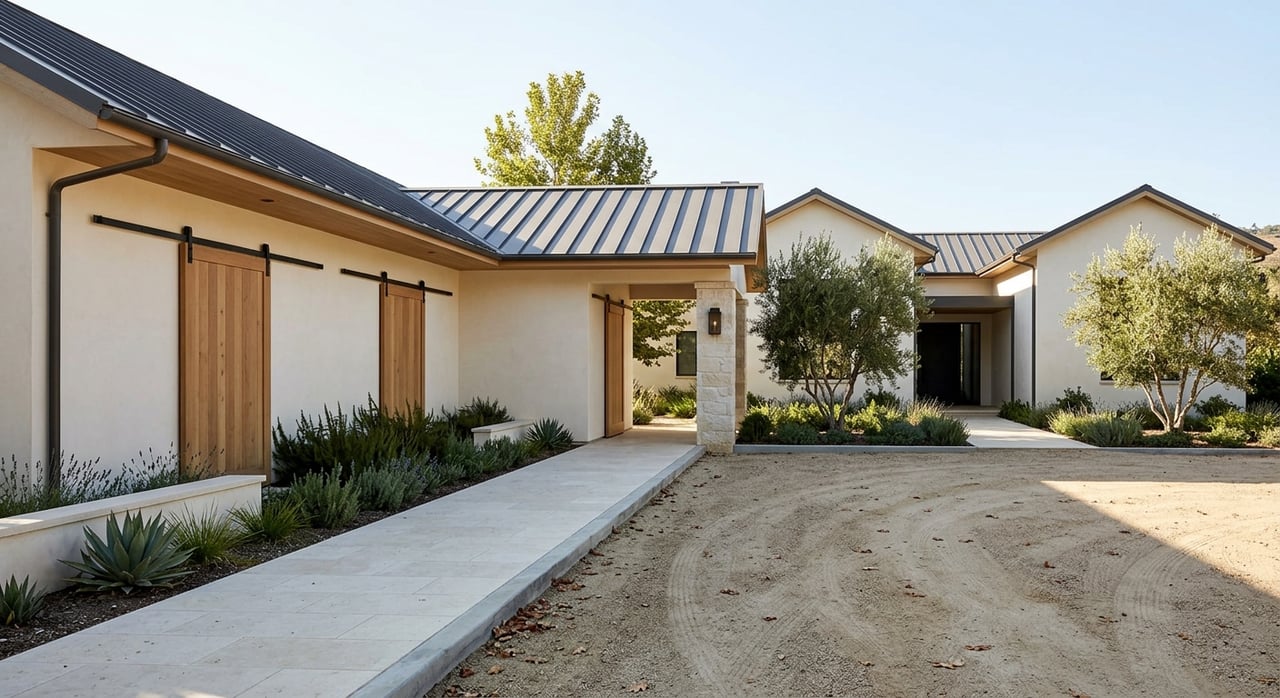

From first conversation to closing day and beyond, Jaime delivers a true concierge experience. She guides clients through every step of buying and selling with clarity and confidence, backed by a trusted team of top-tier professionals. Her team can assist every step from staging and design to photography, inspections, contractors and lending, ensuring the process feels seamless, elevated and exceptionally well managed.
Jaime Krupnick | CA DRE# 02139605
[email protected]
(310) 749-0703
100 N Westlake Blvd Ste 100A
Westlake Village, CA 91362
Rodeo Realty, Inc. | CA DRE# 00951359